精選觀點 & Webinar
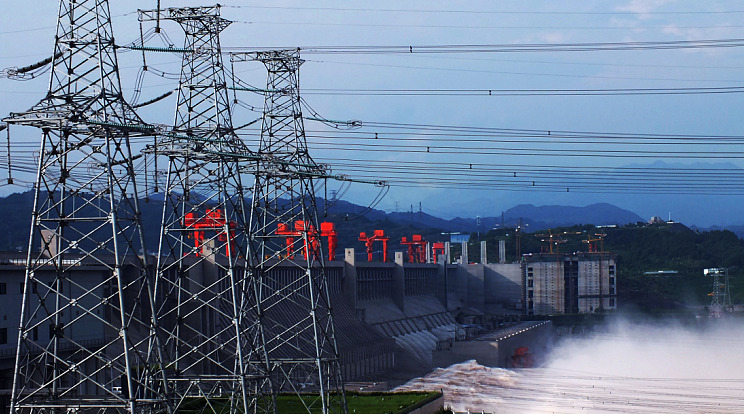
Sichuan has a very real climate change issue to manage this year. After extreme heatwave and drought causing power rationing for industrial users for two weeks, the province is now quickly re-gearing for Level IV flood emergency alert. While most factories are able to resume production now, should we be concerned especially with memories from the power crunch actions last year? What would be the impacts and ripple effects we should pay attention to? In this article we reviewed the background triggering the Sichuan situation, and why we believe the power rationing events are more pre-emptive in nature and energy security is very carefully managed in the planned economy of China.
Aug 31, 2022

Global markets have been subject to higher volatility so far in 2022 amid escalating inflation and recession risks. The US rate hike cycle has added further pressure to the dollar return of most foreign-currency-denominated assets due to the strengthening dollar. In this article, we describe the genesis behind the recent addition of USD hedged unit class to our Premia China Treasury and Policy Bank Bond Long Duration ETF (9177.HK), which is the first among peers to offer USD hedging feature in Asia. For investors that are mindful of mark to market risk amid continued US interest rate hikes, as well asset owners with long duration allocation needs, the Premia China Treasury and Policy Bank Bond Long Duration ETF is a unique tool that provides access to the long duration Chinese government and policy bank bonds with strong A1 sovereign bond rating, competitive yield of over 3%, stable yield volatility and now with the USD hedged unit class, additional optionality to capture the steady yield of China sovereign bonds whilst minimizing exchange rate risks for RMB.
Aug 18, 2022

Notwithstanding the cautious sentiment towards Chinese equities over the past year, the fundamentals suggest that it would be increasingly difficult to ignore Chinese equities as its economic heft and importance continues to grow. In this article, our Senior Advisor Say Boon Lim analyzes the fundamentals of the Chinese economy and why it makes sense for global allocators to deploy Chinese equities for diversification and growth opportunities as the alternative would be a deliberate underweight decision for a large part of the world's GDP and the key driver for global productivity growth.
Aug 11, 2022

After lithium, coal and pork, polysilicon appears to be the next in line for potential government price interventions. In fact, polysilicon prices which have been on nine consecutive weeks of spiking spree, have reached 10-year high and the high prices have caused severe supply chain disruptions and suppressed domestic demand for solar panels – and in the process slow down the solar infrastructure build out in China. Such price intervention thus is envisaged to be a positive regulating event, that would shift the industry dynamics from upstream biased to more midstream and downstream actors, to rebalance the supply chain economics for long run sustainable growth of the industry ecosystem. In this article, we shall analyze this in greater details, and explain why despite the headline concerns it would be a positive event for the sector leaders including related constituents in the Premia ETFs, while the polysilicon market is expected to remain tight throughout the year due to persistent strong global demand and supply shortages.
Aug 04, 2022

Although a lot of unprecedented events happened in the past few years, financial market rallies have bolstered positive wealth effects and expanded the balance sheet for many investors – until recently. This year has been extremely challenging for even the most astute and well-researched investors. How do we make sense of so much uncertainty around inflation, geopolitical tension, recession, pandemic and more? Recently our Senior Advisor Dr. Jason Hsu, Chairman and CIO of Rayliant Global Advisors has published 7 Predictions for a Stagflation Economy, which raised some bold and perhaps uncomfortable possibilities that would be helpful for us all to reflect and prepare for. In this webinar, we shall discuss with Dr. Hsu live to decipher what might be the best way to weather the turbulent markets ahead, and while acknowledging diversification remains the free lunch in investing – what to diversify with? [Watch Replay Here]
Aug 03, 2022

As stocks around the world struggled in Q2 2022, China A shares produced a positive return, with the CSI 300 Index adding +6.2% for the quarter. This muted number nevertheless belies an action-packed three months, as investor sentiment toward mainland shares reached a low in April, with Shanghai and other major cities entering growth-stunting lockdowns amidst a rapid spread of COVID variants, only to recover sharply in May and June, as easing public health restrictions allowed Beijing to start ramping up a massive stimulus program intended to set the nation’s economy up for a strong second half leading into Q4’s National Congress. Here we offer some perspective on factor drivers in China’s market during the second quarter and comment on what might come next for Chinese stocks.
Aug 01, 2022

What will the next era of China’s economy look like? Invest in the leading companies driving China’s New Economy through the Premia CSI Caixin China New Economy ETF.
Jul 28, 2022

As the Developed Markets are weathering havoc from increasingly hawkish rate hike actions, ASEAN equities continue to retain relative calm and outperform DM as a regional expression of global value trade. While the trajectory for economic upgrades and earnings growth prospects remain intact, as DMs slide deeper into bear markets, some tweaking of the ASEAN trade – as a pure Emerging Market play – might achieve even better relative outperformance. In this article our Senior Advisor Say Boon Lim discussed drivers behind the outperformance of our Emerging ASEAN strategy against MSCI World Growth, and what investors with the flexibility for a spread trade might consider as the dynamics will likely remain in place for the rest of this year.
Jul 04, 2022

The American dilemma – recession by policy tightening or stagflation by policy avoidance. US GDP growth is running so low now that a recession is a very high probability event within 12 months as rates rise further. The drivers of that coming recession will be both inflation and higher rates: There can be many different variations of the balance between the pace of rate hikes and the pace of inflation. As US economic growth slows further in coming months, the US Federal Reserve will be tormented over the awful choice between the longer-term impact of inflation and the more immediate risk of recession. Yet in the end, if rate hikes do not crush US economic growth, inflation will eventually do the same, albeit with a greater lag. In this article, our Senior Advisor Say Boon Lim explains why bounces in US equities are likely to be “get out of jail” cards, with lower lows and lower highs the most likely outcome.
Jun 29, 2022

Chinese equities have been putting on breakouts above technical resistances just as Developed Markets are breaking down and US stocks have been collapsing into bear territory – and this does not seem coincidental. At opposite ends of the policy cycle. At the heart of this may be the policy tightening in the US, the looming consequent recession, and the search for alternatives to US assets – stocks, Treasuries and corporate credits. China’s recent commitments to fiscal and monetary stimulus are a welcome counterpoint to the falling monetary aggregates, surging rates and yields, and fiscal consolidation in the US. In this article, our Senior Advisor Say Boon Lim discussed the significance of onshore A-shares breaking above the technical resistance of 100-day moving average, as it has a tendency to be followed by quite substantial periods of gains.
Jun 17, 2022
Premia 圖說

吳偉鋒
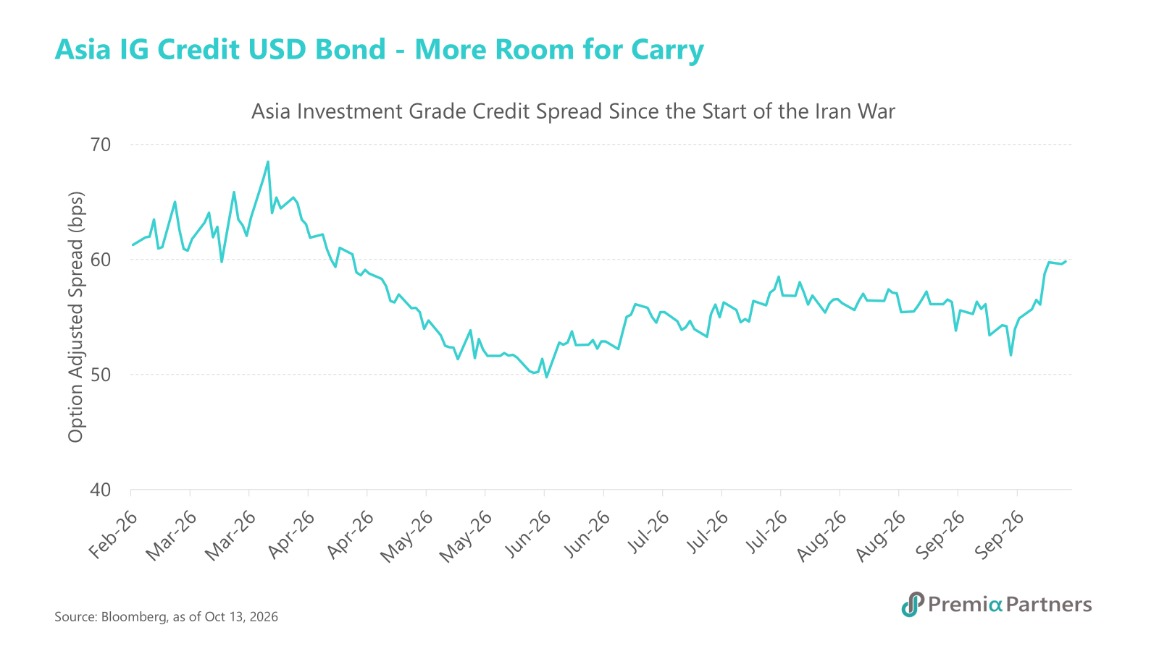
Year-to-date Premia J.P. Morgan Asia Credit Investment Grade USD Bond ETF (Premia Asia IG ETF) has outperformed longer duration peers. Even as US Treasuries yield widened to their highest yields in over two decades, the Asia IG ETF has proven relatively resilient. Across assets classes, some investors now see US Treasuries as better value than US equities and started rotating from US risk asset to duration – yet Asia IG still offers a yield pickup over US Treasury - making it even more attractive. Asian credit spreads widened modestly in recent weeks on concern about Indonesia and Philippines, and have begun to retrace as those worries ease. In our view, the current spread level offers a better window to add to Asia investment grade (IG) credit. Indonesia has been viewed as the region's main fiscal pressure point, with concerns over state spending and the credibility of the 3% of GDP deficit cap weighing on Asian spreads more broadly. The government has since begun to rein in expenditure. While the announced measures look modest, but markets read them as a sign of discipline : Indonesia's 5-year CDS has eased from a recent high of ~96bps to ~91bps as of 12 October, pointing to stabilisation. Meanwhile, despite the near-term pull back in the US 10-year yield, large US deficits point to heavier issuance, so holding long duration outright carries meaningful risk. Shorter-duration IG credit offers a better balance. The Premia J.P. Morgan Asia Credit Investment Grade USD Bond ETF (3411/9411 HK) offers a ~4.3-year duration and a ~5.5% average yield to maturity, with an average A rating and around 10% in floating-rate notes. That lets investors earn carry and stay invested with moderate rate exposure. In a market still arguing over where yields settle, The Premia Asia IG ETF offers a way to be paid while the debate plays out — a better balance between rate bets and carry, and a more sensible place to “keep calm and carry on”.
Oct 14, 2026