精選觀點 & Webinar

Premia CSI Caixin China Bedrock Economy ETF (2803.HK), Premia CSI Caixin China New Economy ETF (3173.HK), Premia China STAR50 ETF (3151.HK), and Premia Asia Innovative Technology and Metaverse Theme ETF (3181.HK) recently completed the annual rebalancing exercise after market close on Jun 9th 2023. In this article we highlight the changes and provide a brief analysis of the post-rebalance profiles of each ETF.
Jun 19, 2023

While China's April data did miss market expectations, the disappointment was off very high expectations set by the market itself. In fact, the so-called April “disappointment” looks very different when viewed in a global context. In this article our Senior Advisor Say Boon Lim discusses why it is important to look beyond the underperformance of those high expectations, to properly address opportunities leading to China's own 5% growth target and IMF’s estimates for China to contribute around 30% of the world’s GDP growth for this year which still very well hold.
Jun 08, 2023

Investors used to prefer privately owned enterprises (POEs) over state owned enterprises (SOEs) in owning Chinese equities in the past. This was under the conventional thinking that the former tends to be more efficient, growth and profit-oriented, and innovation driven, while the latter is often constrained by more bureaucracy and non-profit priorities including social responsibility, support employment and social stability, and traditional DNA that are less conducive to changes and innovations. With strong government backing and all the new government policies promoting the SOE reforms and emphasizing SOEs’ value discovery, it may be time to challenge the stereotype as there emerges a new cohort of SOEs that begs to differ and has full backing of policy makers to reinvent themselves and unlock values to commensurate their contributions to the real economy. In this article we discuss the background behind the SOE re-rating/ revaluation trade that has become popular lately, and identify the optimal way of getting the right exposure of Chinese SOEs.
May 26, 2023

China’s stock market rode a wave of positive sentiment on a policy shift that brought the world’s second-largest economy out of lockdown, pushing the CSI 300 Index up 4.7% for the quarter and leading to even stronger performance for strategies applying intelligent factor tilts within the bedrock economy and new economy. Even so, macro data throughout the quarter charting China’s recovery from strict zero-COVID containment measures led some investors to question the strength and sustainability of the nation’s economic rebound. In this article, Dr. Phillip Wool, Global Head of Research of Rayliant Global Advisors discusses first-quarter performance and considers what the next phase of China’s reopening could mean for investors.
May 18, 2023

Internet platforms used to be the dominating forces in driving China’s tech cycle in the last decade, but their high-growth phases in e-commerce, gaming, ride-hailing and last-mile delivery are slowing substantially as indicated by the latest result announcement and management guidance. Changes in government policy, antitrust concerns, breach of data security and maturing markets are all pointing to a less promising outlook of their business models. On the contrary, hardcore technology, particularly the semiconductor, is the rising star in the market despite the increasing hostile actions taken by the Biden administration. This article would explain why semiconductor will be one of the key focuses of China’s stock market in the foreseeable future and how Premia China STAR50 ETF is the right tool to capture the industry opportunities as investors reposition for the paradigm shift in the technology space in China.
May 04, 2023

Some traders borrow the expression “the postman always rings twice” from the title of that 1981 movie. It is to make the point that markets often give investors a few opportunities to get in or get out. We believe the first time the “postman” rang already for a downtrend when the S&P 500 hit an intra-day high of 4195 in early February but it failed to sustain above the 50.0% Fibonacci retracement of the decline from January 2022 to October 2022. In this article, our Senior Advisor Say Boon Lim discusses the valuations and earning forecasts for US markets, and the “postman” may just have rung a second time when the S&P 500 was once again testing its 78.6% Fibonacci retracement resistance.
Apr 13, 2023

Banking failures in the US, the recent epic takeover of Credit Suisse and the wipe out of its AT1, speak volumes about the stage of the cycle in Developed Markets. In particular, they warn against underestimating the risks at this stage of the asset and economic cycles. The Fed now risks a return to 1970-1985 if it loses its nerve on rates, and it is going into battle with very little – rates are lower than at previous cyclical bottoms and inflation is higher. In this article, our Senior Advisor Say Boon Lim shares his reflections on the US cycle, inflations, rates and asset markets, and while US asset market outlook is worrying, why China is increasingly becoming a safe haven trade for investors.
Mar 20, 2023

China markets witnessed strong rally since Oct 2022 trough upon China reopening and covid policy pivot, and we start to see investor flows rotating from offshore to A-shares which are expected to outperform with a longer run for rally. Where are we in China’s reopening trajectory? Who are the policy supported sector leaders well placed to outperform? These are the common questions frequently asked by our clients. In this article, we discuss the 10 most frequently asked questions that came up in our recent conversations with investors and allocators, and share more color about pockets of opportunities as China reopening evolves into the second act for economic growth recovery.
Mar 17, 2023

China market has taken a pause after a strong rally in the past few months. The renewed hawkish tone from the US Fed may be the main reason behind the consolidation. Some critics are suggesting that the China reopening trade is done, or has become overcrowded already with not much immediate upside as a tactical trade. In this article, our Partner & Co-CIO David Lai addresses this topic from various aspects ranging from macro economies, investors’ positioning, to policy agenda and market valuation. He would also share why we believe it’s onshore A-shares that are picking up the baton for the second act of the rally - as the China reopening play evolves from short term tactical, to fundamental strategic opportunities driven by positive earnings growth and restoration of business and consumer confidence.
Mar 02, 2023

Chinese stocks took a rollercoaster ride in Q4, as the immediate lacklustre reaction to October’s National Congress gave way to a rally on the back of policy support in November. Investors finally cheered Beijing’s abrupt dismantling of its restrictive zero-COVID policies, as the year came to a close. By the end of December, the CSI 300 Index was up 2% on the quarter. Below in this article, Dr. Philip Wool, Managing Director and Head of Investment Solutions of Rayliant Global Advisors, would explore critical developments in the macro picture at the turn of the year, discuss fourth-quarter performance and factor rotation pattern through the period, and also provide our thoughts as to what reopening has in store for Chinese stocks in 2023.
Feb 04, 2023
Premia 圖說

吳偉鋒
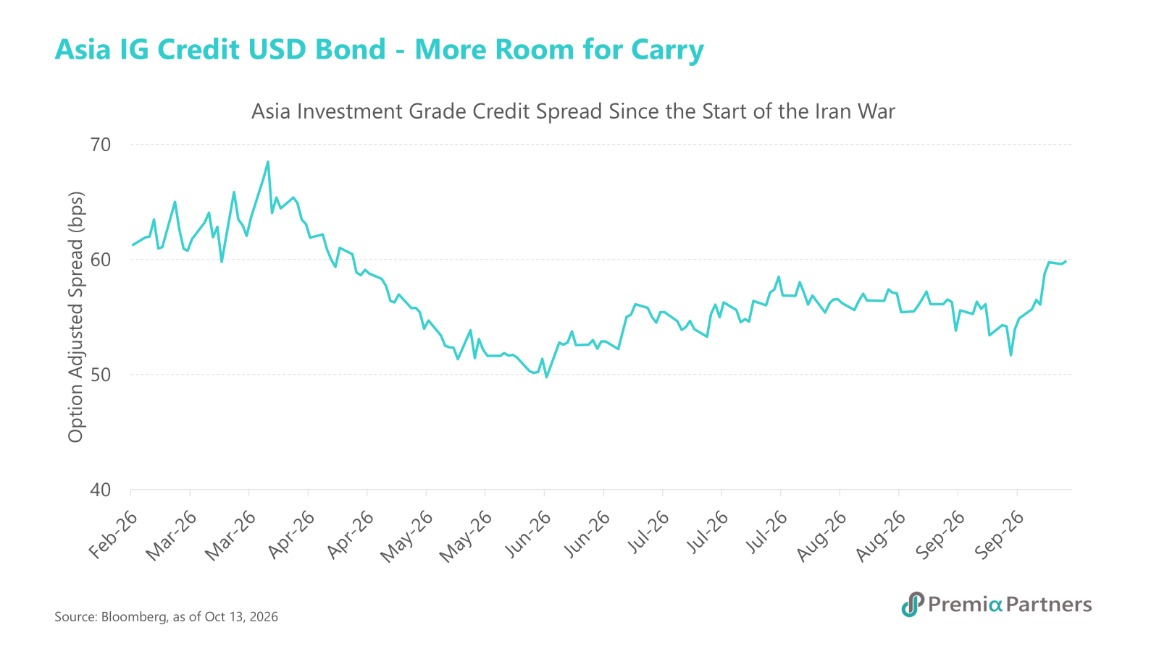
Year-to-date Premia J.P. Morgan Asia Credit Investment Grade USD Bond ETF (Premia Asia IG ETF) has outperformed longer duration peers. Even as US Treasuries yield widened to their highest yields in over two decades, the Asia IG ETF has proven relatively resilient. Across assets classes, some investors now see US Treasuries as better value than US equities and started rotating from US risk asset to duration – yet Asia IG still offers a yield pickup over US Treasury - making it even more attractive. Asian credit spreads widened modestly in recent weeks on concern about Indonesia and Philippines, and have begun to retrace as those worries ease. In our view, the current spread level offers a better window to add to Asia investment grade (IG) credit. Indonesia has been viewed as the region's main fiscal pressure point, with concerns over state spending and the credibility of the 3% of GDP deficit cap weighing on Asian spreads more broadly. The government has since begun to rein in expenditure. While the announced measures look modest, but markets read them as a sign of discipline : Indonesia's 5-year CDS has eased from a recent high of ~96bps to ~91bps as of 12 October, pointing to stabilisation. Meanwhile, despite the near-term pull back in the US 10-year yield, large US deficits point to heavier issuance, so holding long duration outright carries meaningful risk. Shorter-duration IG credit offers a better balance. The Premia J.P. Morgan Asia Credit Investment Grade USD Bond ETF (3411/9411 HK) offers a ~4.3-year duration and a ~5.5% average yield to maturity, with an average A rating and around 10% in floating-rate notes. That lets investors earn carry and stay invested with moderate rate exposure. In a market still arguing over where yields settle, The Premia Asia IG ETF offers a way to be paid while the debate plays out — a better balance between rate bets and carry, and a more sensible place to “keep calm and carry on”.
Oct 14, 2026