精選觀點 & Webinar

Although the US Dollar Index DXY is likely to pick up a bit more in coming weeks if equities weaken, the longer-term outlook for the Greenback beyond the acute phase of COVID-19 is bleak.
Jun 23, 2020
In crisis times like the current COVID scenario, when many stocks are at multi-year lows and finding opportunities seems to be challenging, our Premia Asia Innovative Technology strategy has proved to be among the most resilient large-cap thematic strategies that has rebounded well above the pre-COVID level with a YTD return of 7.1% (as of 6/12/2020) while also recently hitting an impressive record-high since its inception in August 2018. In this piece, we decipher for you this strategy’s exposures and why it is (more) relevant to investors, particularly post-COVID.
Jun 18, 2020
![[財新國際圓桌] 抗擊新冠疫情:政策分析與實踐經驗 (回放)](https://etfprod.premia-partners.com/articleImg/pic/200615130125380.jpg)
本期財新國際圓桌主題為“抗擊新冠疫情:政策分析與實踐經驗”,會議包含宏觀解讀與實踐分析兩方面內容,主要結合新冠疫情背景下各國政策與復工復產經驗。
Jun 15, 2020
As cyclical movements would revert and short-term volatility hikes would calm, long-term strategic investors often look out for overarching secular or structural trends. Yet by definition, structural shifts and new innovations often take time. However, there can be catalysts! Witnessing a black swan can be a crisis, but like Winston Churchill advised – let’s not waste a crisis. So where do we look for growth opportunities?
Jun 12, 2020

The Two Sessions are always of interest to the market for the key economic policies unveiled by Chinese leaders. At this year’s Two Sessions, China decided not to set a GDP growth target for the first time in decades, raised the budget deficit ratio above a long-held “red line,” issued special treasury bonds for the first time in the last 2 decades, and rolled out a host of measures to buoy employment and support economic recovery from Covid-19.
Jun 10, 2020
隨著聯網汽車和智能家電等消費領域的應用日益普及,物聯網(IoT,Internet of Things)已逐漸為人所熟知。而在工業領域,正如我們一再強調與關注的話題——企業數位化轉型將重寫產業遊戲規則,而工業互聯網(IIoT,Industrial IoT)正是其中的重要環節。事實上,工業互聯網即是「中國新基建」七大重點投資領域之一,受到中國官方政策的大力支持。所以,工業互聯網是甚麼?為何其中的行業領導者在疫情期間更具彈性?在本篇文章中,我們將分享工業互聯網的概念,以及該領域的發展進程和投資機會。
May 26, 2020

Given the trade tensions and looming risks of de-globalisation, it is likely that China will embark on a different growth path in the aftermath of COVID, and increasingly rely on domestic demand to drive growth. This structural shift holds significant implications for EM Asia. In fact, ASEAN replaced the European Union as China’s biggest trading partner in 1Q20. In this webinar, our co-CIO David Lai shares our research and insights on investing into ASEAN markets in light of the late COVID crisis, re-escalating US-China trade dispute and more importantly the gradual global supply chain reconfiguration.
May 26, 2020

China is in the early stage of restarting its economy, and China A shares market has held up relatively well compared to other global equities markets amid the COVID. In particular, our Premia China New Economy strategy has been very resilient throughout the crisis with YTD NAV performance of 10.7% (in CNY, as of May 26th, 2020). It has been consistently seeing inflows over the past months and is also among the best performing broad market China A ETFs globally. In this webinar, our co-CIO David Lai shares first-hand insights on the post-COVID impact, policy developments, and capital market flows of the Chinese market. As China recovers from the pandemic, how shall investors watch out for opportunities from the post-COVID recoveries, policy supports and new norms?
May 26, 2020
越南防疫佳績有目共睹,政府自4月23日以來循序漸進地鬆綁封鎖政策,儘管受全球疫情影響,其宏觀數據仍不如預期。越南政府於上週(5月15日)調整了原先設定的5%經濟增長率目標,根據不同假設情境制訂兩個方案:若主要貿易夥伴的疫情在今年第三季得到控制,則增長目標為4.4%-5.2%;若主要貿易夥伴的疫情遲至第四季才得到控制,則增長目標為3.6%-4.4%。越南目前的情況究竟為何?是時候復甦了嗎?本篇文章我們將針對多方面進行簡要更新。
May 18, 2020
Given the trade tensions and looming risks of de-globalisation, it is likely that China will embark on a different growth path in the aftermath of COVID, and increasingly rely on domestic demand to drive growth. This structural shift holds significant implications for EM Asia. In fact, ASEAN replaced the European Union as China’s biggest trading partner in 1Q20. And as a result of the increased tension and US protectionist measures targeting China, and pressure for MNCs to choose which one they side with under the pretext of protection against production disruptions in China, ASEAN and notably Vietnam are clear winners. But a more nuanced picture is closer to the truth. That is, the shifts in supply chains are more likely to be gradual than dramatic.
May 18, 2020
Premia 圖說

吳偉鋒
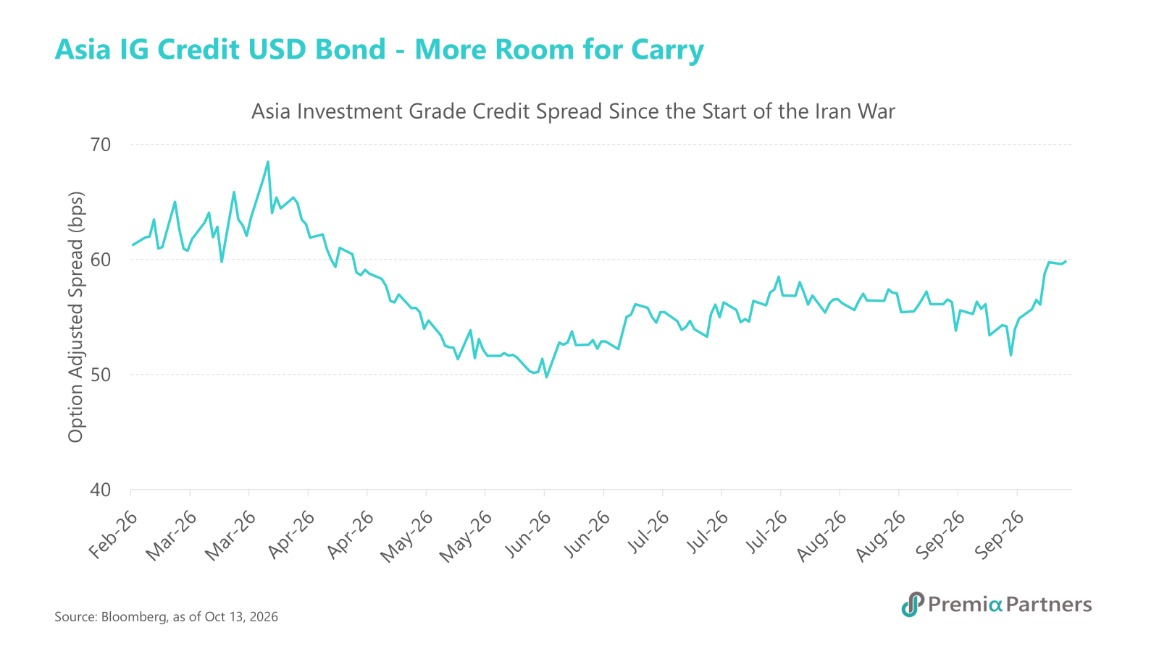
Year-to-date Premia J.P. Morgan Asia Credit Investment Grade USD Bond ETF (Premia Asia IG ETF) has outperformed longer duration peers. Even as US Treasuries yield widened to their highest yields in over two decades, the Asia IG ETF has proven relatively resilient. Across assets classes, some investors now see US Treasuries as better value than US equities and started rotating from US risk asset to duration – yet Asia IG still offers a yield pickup over US Treasury - making it even more attractive. Asian credit spreads widened modestly in recent weeks on concern about Indonesia and Philippines, and have begun to retrace as those worries ease. In our view, the current spread level offers a better window to add to Asia investment grade (IG) credit. Indonesia has been viewed as the region's main fiscal pressure point, with concerns over state spending and the credibility of the 3% of GDP deficit cap weighing on Asian spreads more broadly. The government has since begun to rein in expenditure. While the announced measures look modest, but markets read them as a sign of discipline : Indonesia's 5-year CDS has eased from a recent high of ~96bps to ~91bps as of 12 October, pointing to stabilisation. Meanwhile, despite the near-term pull back in the US 10-year yield, large US deficits point to heavier issuance, so holding long duration outright carries meaningful risk. Shorter-duration IG credit offers a better balance. The Premia J.P. Morgan Asia Credit Investment Grade USD Bond ETF (3411/9411 HK) offers a ~4.3-year duration and a ~5.5% average yield to maturity, with an average A rating and around 10% in floating-rate notes. That lets investors earn carry and stay invested with moderate rate exposure. In a market still arguing over where yields settle, The Premia Asia IG ETF offers a way to be paid while the debate plays out — a better balance between rate bets and carry, and a more sensible place to “keep calm and carry on”.
Oct 14, 2026