精选观点 & Webinar

The great divergence between economic growth in China versus the rest of the Emerging Markets post-COVID-19 has increased the likelihood of a parting of ways between China and EM in asset allocations.
Mar 09, 2021
US sanctions on trade, technology, and financial market access have done little to dampen foreign investor enthusiasm for China. There has been a surge in foreign investment flows, both portfolio and direct, into China over the course of 2020: All of which begs the questions “why” and “how sustainable is this”?
Feb 25, 2021
Little speculative manias are bubbling up to the surface in the US markets. But while financial instability is growing in the United States as a result of aggressive monetary expansion, a collapse in the equities market does not appear imminent given tame inflation and ultra-low rates and yields.
Feb 16, 2021
According to the United Nation Environment Programme, an inclusive green economy is an alternative to today's dominant economic model, which exacerbates inequalities, encourages waste, triggers resource scarcities, and generates widespread threats to the environment and human health.
Jan 22, 2021
The US Federal Reserve pumps out an endless stream of zero interest rate money to finance the Government’s deficit spending. The handouts make most American workers better off financially during the pandemic than before. Meanwhile, the stock market soars. Not bad for the worst pandemic in 100 years. What can possibly go wrong?
Jan 20, 2021

随着COVID疫情走向复甦,中美摩擦等地域风险逐渐晴朗,2021投资者可以如何佈局? 我们的联合首席投资官赖子健先生与我们团队的郭子豪先生为大家分享对亚洲高成长地区及高成长行业的展望,「我们可以如何通过Premia的投资策略来捕捉这些大趋势下的盈利机遇,并讨论了对近期市场环境相关热门话题的看法。
Jan 04, 2021
Outperformer from first news of successful vaccines. Emerging ASEAN has been one of the best performers among major global equity indices since the start of November. And that was likely due to the region’s high economic leverage to normalisation after the distribution of COVID-19 vaccines and its high trend GDP growth rates relative to other Emerging Market economies.
Dec 24, 2020
Premia 图说

吴伟锋
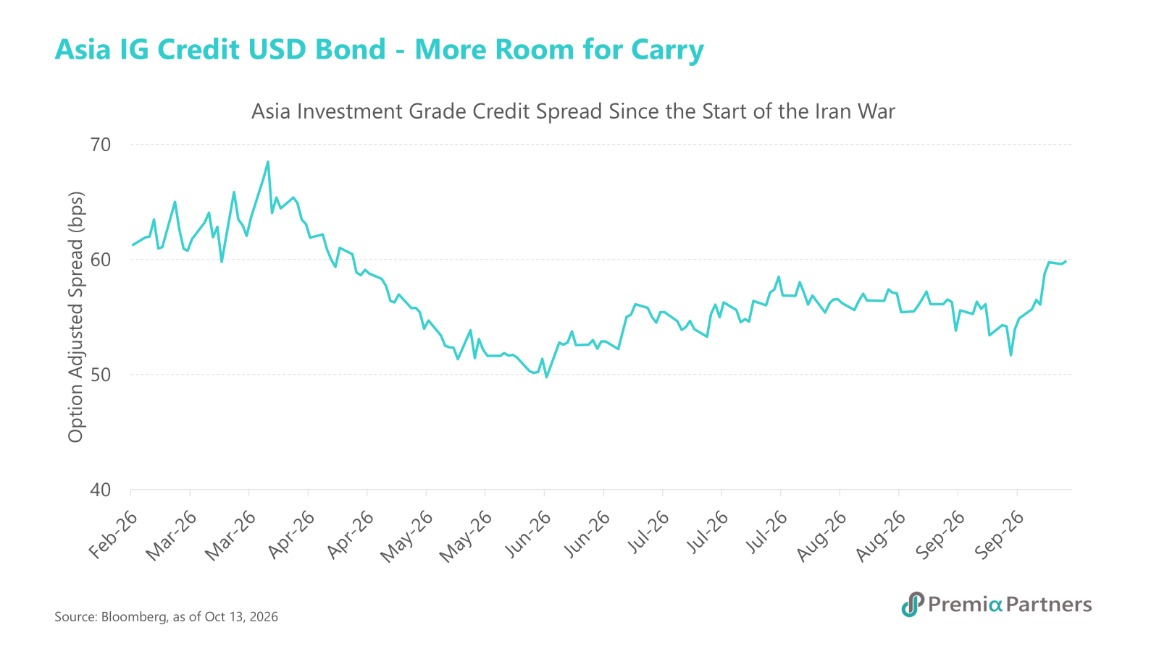
Year-to-date Premia J.P. Morgan Asia Credit Investment Grade USD Bond ETF (Premia Asia IG ETF) has outperformed longer duration peers. Even as US Treasuries yield widened to their highest yields in over two decades, the Asia IG ETF has proven relatively resilient. Across assets classes, some investors now see US Treasuries as better value than US equities and started rotating from US risk asset to duration – yet Asia IG still offers a yield pickup over US Treasury - making it even more attractive. Asian credit spreads widened modestly in recent weeks on concern about Indonesia and Philippines, and have begun to retrace as those worries ease. In our view, the current spread level offers a better window to add to Asia investment grade (IG) credit. Indonesia has been viewed as the region's main fiscal pressure point, with concerns over state spending and the credibility of the 3% of GDP deficit cap weighing on Asian spreads more broadly. The government has since begun to rein in expenditure. While the announced measures look modest, but markets read them as a sign of discipline : Indonesia's 5-year CDS has eased from a recent high of ~96bps to ~91bps as of 12 October, pointing to stabilisation. Meanwhile, despite the near-term pull back in the US 10-year yield, large US deficits point to heavier issuance, so holding long duration outright carries meaningful risk. Shorter-duration IG credit offers a better balance. The Premia J.P. Morgan Asia Credit Investment Grade USD Bond ETF (3411/9411 HK) offers a ~4.3-year duration and a ~5.5% average yield to maturity, with an average A rating and around 10% in floating-rate notes. That lets investors earn carry and stay invested with moderate rate exposure. In a market still arguing over where yields settle, The Premia Asia IG ETF offers a way to be paid while the debate plays out — a better balance between rate bets and carry, and a more sensible place to “keep calm and carry on”.
Oct 14, 2026