Since the "DeepSeek moment" last year, investors globally started to notice the artificial intelligence and broader hard technology space in China has already undergone a profound transformation. Open-weight models from DeepSeek (V4 Flash) and Moonshot AI (Kimi K3) have reportedly overtaken closed Western rivals in both usage and performance on OpenRouter, with Chinese-origin models accounting for over 60% of the platform's developer traffic. News that global tech giants such as Apple, HP, Acer and Asus are sourcing memory chips from ChangXin Memory Technologies (CXMT) also sends a clear signal: China’s hard tech ecosystem is no longer merely struggling for domestic sufficiency, but is turbocharging its learning curve so much that many have started to emerge as world leading heavyweights amid global shortages.
The China STAR board of the Shanghai Stock Exchange is where these emerging leaders across China’s hard tech ecosystem congregate. The cohort represented by Premia China STAR50 ETF (3151 / 9151 / 83151 HK) is now a strong league of chip foundries, IC design, semiconductor equipment, new materials, aerospace, embodied AI and robotics, quantum technology and biotech innovators that started to put their names in the global map. Many also have delivered unprecedented earnings growth and technological breakthroughs in the recent months. Notwithstanding the recent pullback since July, the cohort has returned 24.5% year-to-date in USD terms as of September 24, 2026, significantly outperforming major benchmarks including the CSI 300 (1.7%), Hang Seng Tech (-20.1%), and Nasdaq (16.4%). For global investors seeking to truly position for AI-related growth opportunities, the STAR 50 would be an important piece not to be missed.
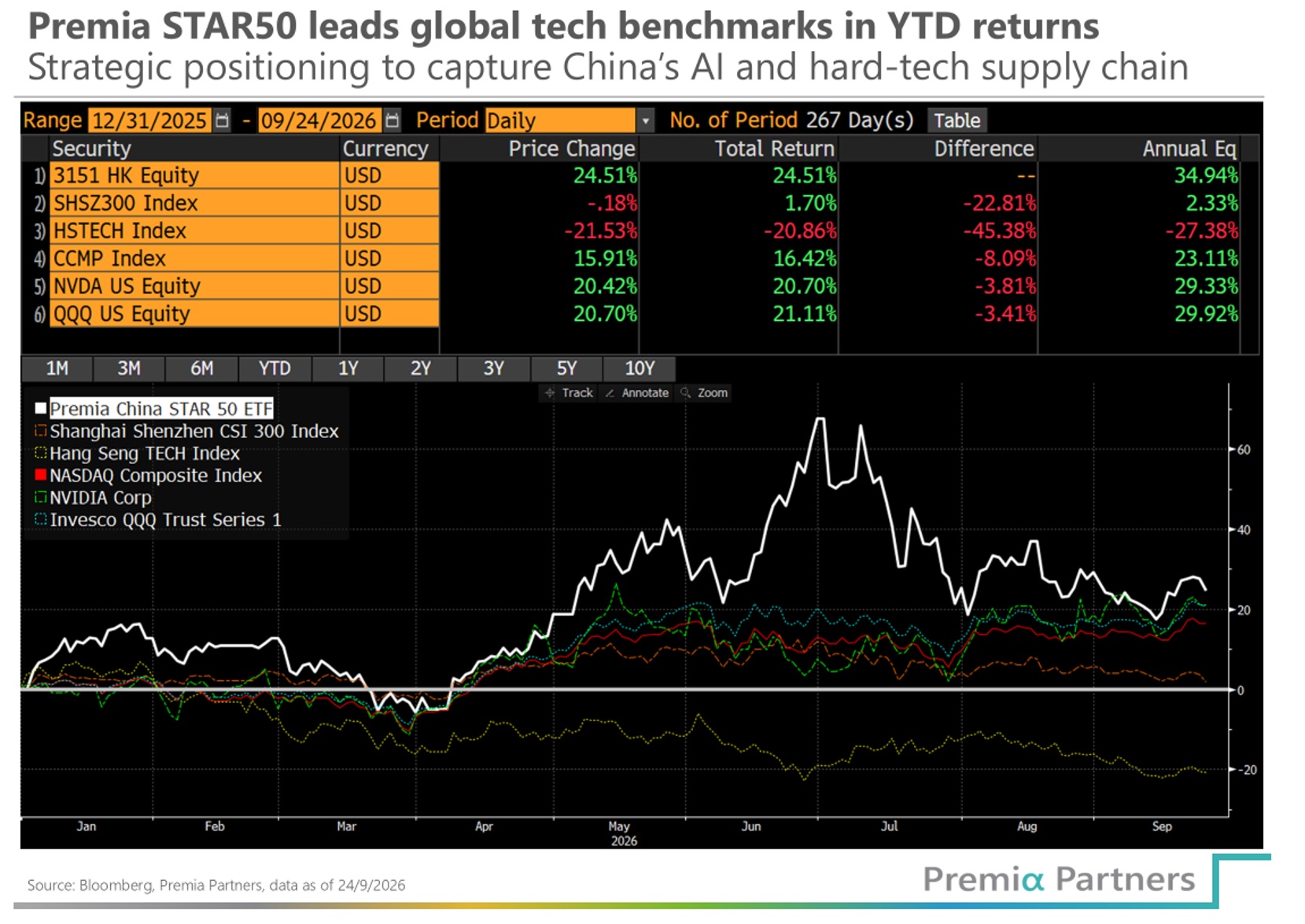
2026 is the defining year for many STAR50 members that have seen unprecedented earnings growth driven by domestic substitution policy and technological breakthroughs across China’s AI infrastructure ecosystem
The market is no longer pricing this cohort purely on stories and rarity factor, but genuine visibility to and top-line monetization, expanding operating margins, bottom-line profitability, and more importantly, robust growth outlook supported by technological breakthrough and robust demand.
- Benefitted by the acceleration of Chinese hyperscalers’ AI capex build out, Cambricon crossed the RMB 1 trillion valuation threshold as its revenue surged to nearly RMB 6 billion in the first half of the year, approaching its full year figure for 2025, and extending profitability growth by 122.6% YoY after turning from loss to profit in 2025. Riding the massive wave of cloud server chips, Cambricon has secured a 14% share of the domestic market, together with Huawei Ascend’s approximately 62% — capturing a combined 76% as China’s access to Nvidia’s highest performance GPUs remains constrained, according to Morgan Stanley’s projections. Furthermore, Cambricon successfully mitigated its customer concentration risks, with its largest client’s revenue contribution dropping from 79.15% in 2024 to 26.21% in 2025, alongside four new additions among its top five clients. Additionally, its R&D maintained a 29.6% YoY growth while R&D intensity dropped from 18% in 2025 to 11.7% through the first half, demonstrating a strong scale effect and a positive feedback loop between rising revenues and expanding profitability.
- Within memory architectures, Biwin Storage, which is a leading memory module integrator, has successfully turned from a net loss last year to record profitability of RMB 7.16 billion in the first half this year. Riding on the global storage supercycle, the company with its multi-billion-dollar long-term procurement deals, has successfully locked in flash storage material supply at fixed prices over a two-year horizon, while securing businesses for customized storage solutions from its global clientele including Meta, Google, Xiaomi, OPPO, vivo, Lenovo, HP, Acer and ASUS. The company also expanded into IC design and advanced packaging and testing to gain full coverage of chip manufacturing.
- In high-speed optical interconnects space, as the world’s sixth largest laser chip provider, Yuanjie Semiconductor capitalized on explosive global demand for AI data centers and high-speed optical computing networks, delivering a 351.4% revenue surge and a 1,212.2% net profit expansion in the first half of 2026. The company continued to expand profitability after successfully reversing from a RMB 6.1 million loss in 2024 to RMB 191 million in 2025. As optical module transmission rates transition from 400G toward 800G and 1.6T, Yuanjie Technology's primary continuous wave (CW) laser chip demand far outpaces its capacity ramp speed. According to the projections by LightCounting which is a leading research institution that specialise in the optical communications and semiconductor space, the shortage of CW laser chips will persist through the end of 2026, positioning Yuanjie as a key domestic innovator to continuously benefit.
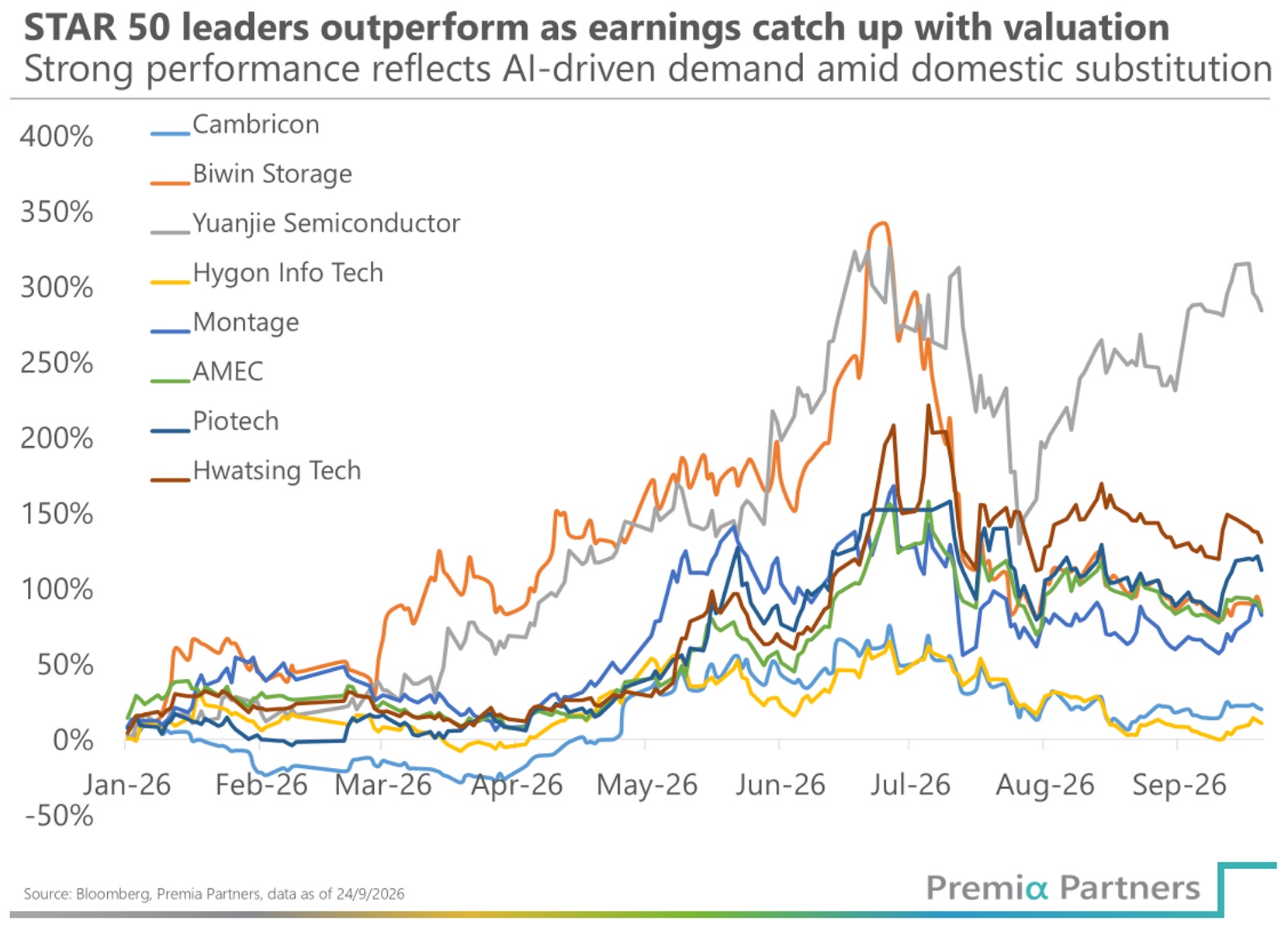
Domestic leaders from capacity chokepoints are enjoying unprecedented pricing power and earnings growth
For the foundational anchors of the STAR 50 index—SMIC, Hygon Information, and Montage Technology—the gating factor for growth is no longer customer demand, but physical chokepoints in manufacturing throughput and wafer allocation. They posted high double-digit profit growth underpinned by supply-side tightness that creates exceptional revenue visibility and underscores a rock-solid fundamental demand narrative.
- As the foundational backbone of China’s semiconductor self-reliance, SMIC posted RMB 38.63 billion in revenue, up 19.4% year-on-year, while nearly doubling its net profit to RMB 4.47 billion in first half year. Operating under near-maximum capacity utilization across its 12-inch fabrication lines, the foundry continues to absorb an unyielding queue of domestic orders as local fabless designers systematically localize their wafer production. Every unit of expanded capacity at SMIC is instantly absorbed by domestic chipmakers, insulating the foundry from global semiconductor cycles and converting localized order backlogs into high-margin operating leverage.
- Anchoring the domestic server processor ecosystem, Hygon Information approached RMB 9.1 billion in revenue, representing a 66.5% year-on-year increase, while net profit grew 49.7% to RMB 1.8 billion. Demand for Hygon’s x86-compatible enterprise CPUs and GPGPU-based Deep Computing Units (DCUs) continues to outstrip available supply, fueled by the aggressive buildout of government AI computing centers and enterprise server upgrades. Since Hygon’s chips run native x86 and CUDA-compatible software stacks with zero migration friction, customer orders are absorbed immediately upon packaging, rendering wafer allocation from foundry partners the only operational cap on its top-line realization.
- Montage Technology delivered a 26.7% revenue increase to RMB 3.34 billion alongside a 72.3% profit surge to nearly RMB 2.0 billion, showcasing the immense pricing power inherent in critical memory interconnect architecture. The company’s top-line realization was powered by accelerating DDR5 server memory penetration, alongside rapid commercial adoption of its PCIe Retimers and Compute Express Link (CXL) Memory Expansion Controllers across AI server architectures. Operating as a non-discretionary signal-integrity gatekeeper for high-density GPU clusters, Montage absorbs immediate market demand with expanding gross margins, converting the global transition to high-speed AI memory into pure, high-quality earnings.
For equipment makers like AMEC, Piotech, and Hwatsing Tech, their explosive profit margins show domestic foundries aggressively procuring their etching, thin-film deposition, and CMP tools to bypass foreign restrictions.
- In the upstream equipment vertical, AMEC demonstrated extraordinary operating leverage, with net profits surging over 300% to RMB 2.83 billion on a 35% revenue increase. This earnings explosion was propelled by the rapid commercial adoption of its high-margin Capacitive Coupled Plasma (CCP) and Inductively Coupled Plasma (ICP) etching tools across advanced manufacturing lines. Since multi-patterning techniques in advanced node fabrication exponentially increase etching intensity per wafer, AMEC’s tools have become non-discretionary procurement items for expanding domestic fabs, ensuring that shipments translate immediately into recognized, high-margin revenue.
- Piotech delivered standout operational performance, recording a 49.1% top-line expansion alongside a massive 1,324% surge in net profit. This extraordinary profit expansion was driven by the rapid commercial deployment of its proprietary thin-film deposition tools, which are being aggressively integrated into new 12-inch wafer production lines. As domestic foundries accelerate tool qualification schedules to build out unconstrained fabrication capacity, Piotech is realizing massive economies of scale, proving that upstream capital expenditures are translating directly into exponential bottom-line expansion.
- Concurrently, Hwatsing Tech expanded its top-line revenue by 35.6%, driven by the aggressive market share conquest of its chemical mechanical planarization (CMP) platforms. By capturing critical market share across rapidly expanding domestic 12-inch wafer fabs, Hwatsing Tech has established its polishing systems as vital equipment in multi-layer interconnect fabrication. The continuous expansion of domestic fab capacity ensures a steady stream of high-margin tool deliveries and recurring consumable tool replacements, providing robust top-line visibility and reinforcing the supply-side thesis.
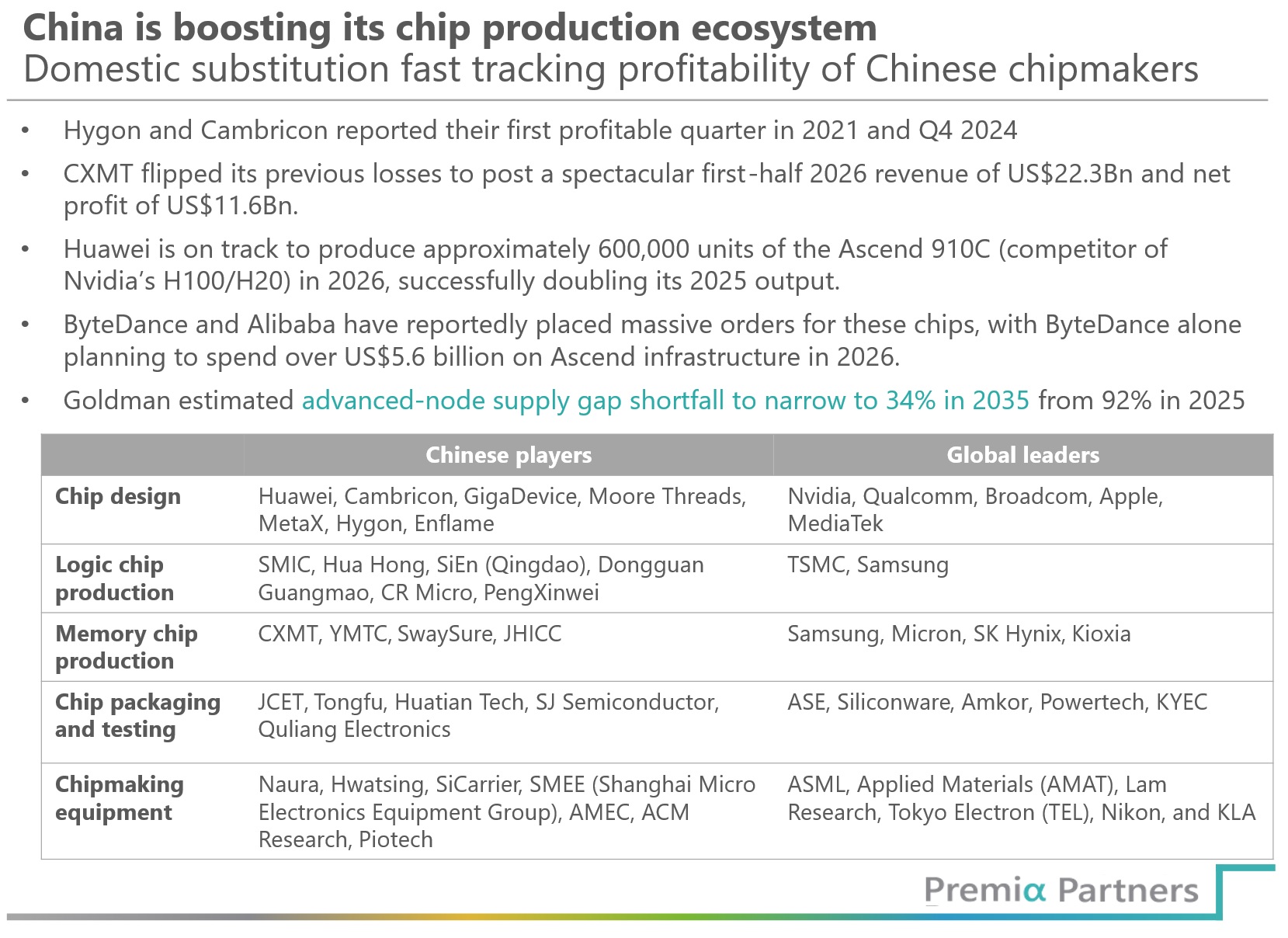
The ultimate bottleneck in lithography technology: would the recent state-backed consolidation efforts accelerate emergence of a credible solution
Lithography remains the primary structural bottleneck within China's semiconductor supply chain, prompting state-backed capital to aggressively dictate investment trends by targeting foundational hardware choke points. Capital allocation from national guidance funds is increasingly hyper-focused on upstream semiconductor capital equipment and full supply chain innovation. A landmark manifestation of this coordinated consolidation is the recent low-volume production of indigenous immersion DUV lithography systems by Shanghai Aishengna Electronic Technology Group—a consolidated entity integrating specialized engineering talent and intellectual property from SiCarrier, Yuliangsheng and Shanghai Micro Electronics Equipment (SMEE). Initial pilot units are currently being deployed across leading domestic foundries and memory makers, including SMIC, Hua Hong Semiconductor and ChangXin Memory Technologies (CXMT), marking a crucial milestone toward establishing a fully localized wafer fabrication loop.
Meanwhile, CXMT has accelerated its advanced memory development, initiating qualification testing for fifth-generation High Bandwidth Memory (HBM3E) despite lacking access to extreme ultraviolet (EUV) lithography tools. By leveraging multi-patterning techniques and advanced 3D packaging architectures, CXMT is actively co-validating its HBM3E stacks alongside prominent domestic fabless AI chip designers, including Alibaba's T-Head. Products integrating these indigenous HBM3E solutions are projected to enter commercial deployment as early as next year, effectively unlocking a severe memory bandwidth constraint for domestic AI accelerators and reinforcing the broader self-reliance narrative across the STAR 50 semiconductor ecosystem.
Domestic substitution and the K-shape economy: what mainstream broad market strategies are missing
China’s Ministry of Industry and Information Technology (MIIT), in the five-year industry plan released recently in September 2026, set a target of 9,800 eflops of intelligent computing capacity by 2030, and called for RMB3.8 trillion (US$532 billion) in cumulative information infrastructure investment over the 2026-2030 period. While authorities were said to mandate that data centres obtain at least 50% of the chips from domestic manufacturers, Chinese tech companies have been pledging to use over 70% domestic chips in their AI data centre buildout. Chinese automakers have also committed to as much as 100% domestic chips in their products by 2027.
This localization upcycle is accelerating K-shaped divergence in the economy, while also filtering out subscale competitors and fabless IC design firms that are unable to secure sufficient capacity allocations from major foundries that are operating at 90% capacity and beyond. For those that are able to secure the precious capacity allocation, their order books are quickly filled as supply is still catching up on the ballooning demand, reinforced by pricing power that is accelerating their earnings growth. Rather than buying both the winners and the losers with indiscriminate broad sector exposure, the STAR 50 index provides a natural mechanism that captures the upper arm of this K-shaped bifurcation. It directs capital into entrenched hard-tech leaders that command priority foundry access, dictate pricing terms, and possess the deep competitive moats required to translate state-backed substitution into outsized earnings.
China’s hard tech is not just about semiconductor supply chain: diversification and alpha from the other corners in the cohort
Beyond foundational deep-tech constituents, the ETF benefits from a diversification layer that acts as a secondary engine for alpha generation across consumer electronics, software, biotech and next-generation industrial tech.
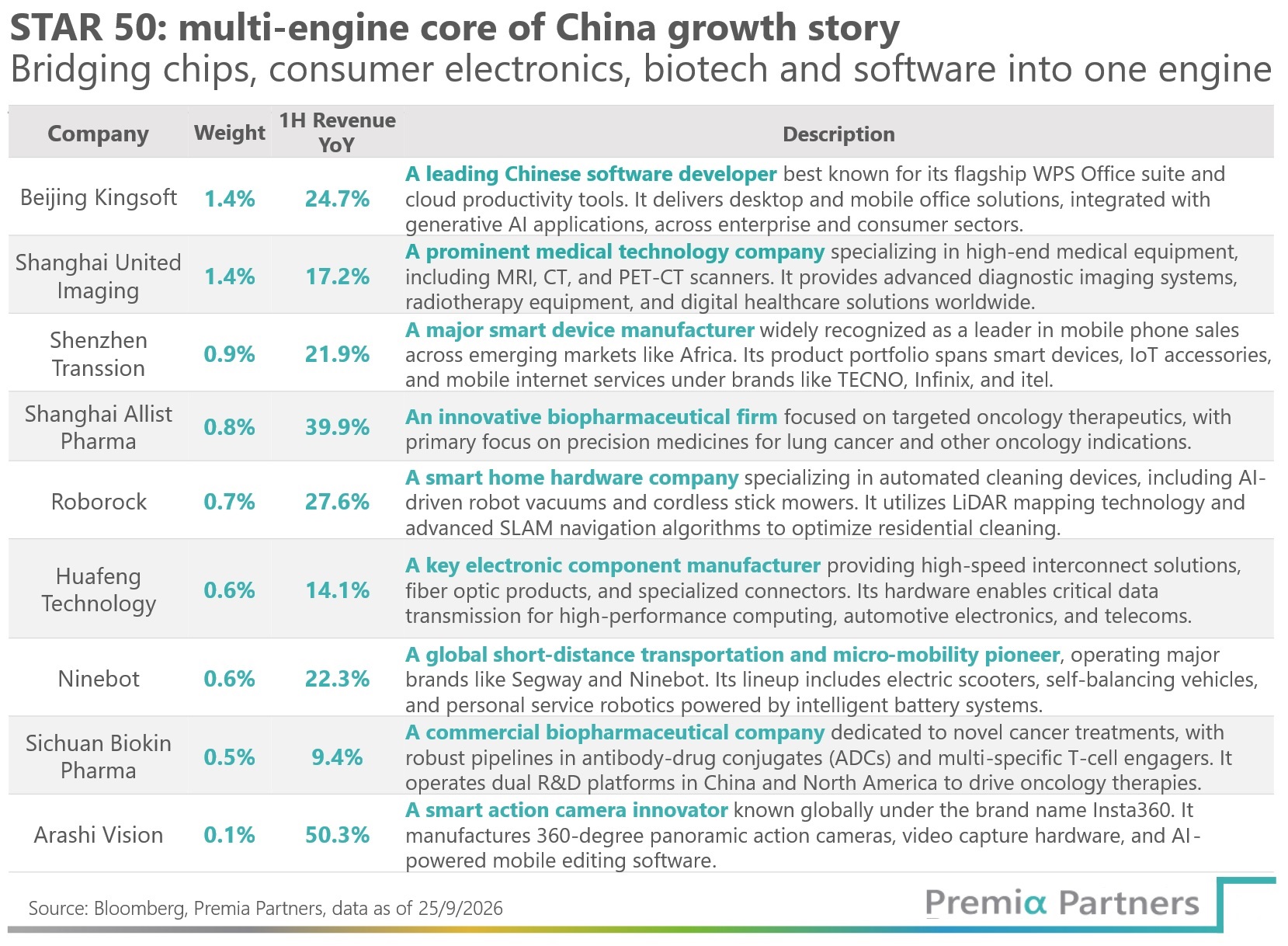
The kingmaker: a competitive cohort that benefits from strong IPO pipeline of the STAR board
The long list of emerging hard tech leaders prioritizing STAR board as the listing venue of choice provides a natural mechanism for STAR50 to stay vibrant and relevant as the index continues to upgrade and rebalance for hard tech leaders with improving commercialisation, profitability and technology breakthroughs across memory, humanoid robotics and aerospace that are major beneficiaries from China’s 15th Five Year Plan, and are driving the efforts to narrow the gap between the Chinese and US hard-tech ecosystems.
Memory: Newly listed ChangXin Memory Technologies (CXMT), China's dominant DRAM leader has addressed a critical gap in the AI memory supply chain by aggressively expanding DRAM capacity and accelerating its roadmap toward HBM. Underscoring this progress, Apple has been qualifying CXMT's memory chips for devices sold in China, while Samsung is reportedly evaluating CXMT DRAM for its budget and mid-range Galaxy line within the region. As the largest Chinese company by market capitalization at listing, CXMT is eligible for inclusion in the STAR 50 index, and is expected to be included in the upcoming December 2026 rebalancing. Under STAR Market’s fast-track inclusion mechanism, whereby a newly listed company that maintains an average daily total market capitalization among the top five would be eligible for STAR50 index inclusion three months after listing. Meanwhile, its peer China’s NAND memory leader Yangtze Memory Technologies (YMTC) has overtaken Kioxia to secure third place globally in NAND flash shipments, expanding its 3D NAND architecture to feed domestic data centers ahead of a planned RMB 33 billion capital raise on the STAR Market. Both CXMT and YMTC have also surged in global league tables, and become global top 4 and top 3 respectively in the DRAM and NAND space.
Physical AI: Unitree as the first humanoid robot company seeking IPO in the STAR market, is a commercially scaled, profitable player in embodied AI. Notwithstanding its lacklustre post-IPO trading and sharp valuation collapse after 6x surge at listing, with the US$904 million IPO proceeds, the company has ample dry powder to rectify its low R&D spends, and is deploying roughly half of its IPO proceeds toward intelligent software models, partnering with DeepSeek to pair its low-cost robotic frames with advanced foundational AI to accelerate the commercial transition into autonomous industrial humanoids.
Aerospace: LandSpace recovered the first stage of its Zhuque-3 rocket on August 19, joining US-based SpaceX and Blue Origin as the only private companies to land an orbital-class booster, effectively narrowing China's gap in reusable rockets. Framed as China's answer to SpaceX's Falcon 9, this technical milestone has significantly bolstered investor confidence ahead of the company’s US$1.11 billion IPO on the STAR Market.
Power: the major driver behind the different philosophies for compute between China and US
The drivers of China's AI buildout diverge fundamentally from the US model, particularly regarding energy consumption. In the United States, surging power demand has made electricity generation a major bottleneck. Goldman Sachs projects US data center power demand will more than double from 31 GW in 2025 to 66 GW by 2027, pushing data centers' share of peak summer electricity demand from 4.1% to 8.5% and triggering a massive valuation re-rating for utility equities.
In contrast, China's robust energy infrastructure ensures electricity is not the limiting factor. Installed power generation capacity reached 4.08 terawatts by July 2026, up 11.0% year-on-year, with renewables accounting for over 60%. Data centers accounted for roughly 1.6% of total consumption in 2025, projected to rise to just 6% by 2030, leaving massive headroom. Consequently, domestic capital is not distracted by utility re-ratings; it remains hyper-concentrated exactly where the STAR 50 excels: upstream semiconductor hardware, high-speed interconnects, and advanced processors engineered to drive down aggregate computing costs.
Navigating physical node limits: balancing power realities and software compatibility
It is often said that for AI development, the US is power-bound while China is chip-bound. Meanwhile, semiconductor advancement is increasingly restricted by traditional geometric scaling under physical and economic limits. TSMC’s leading-edge 2nm process faces diminishing returns due to thermal stress and surging US$30,000–$33,000 per wafer cost that pass through consumer electronics, such as the latest iPhone, to absorb projected 9% to 12% retail price hikes.
Restricted from acquiring EUV equipment, Huawei has countered by pivoting from physical shrinking to latency optimization under its "Tau (τ) Law." By vertically stacking planar circuits through "LogicFolding," Huawei reportedly can shorten on-chip signal paths, achieving a 55% transistor density boost on the Kirin 9050 Pro using mature nodes. This architectural approach could circumvent leading-edge fabrication bottlenecks, providing a viable high-performance roadmap despite an acknowledged five-year physical manufacturing lag behind TSMC.
To compensate for individual hardware performance gaps—where domestic accelerators operate at roughly 60% to 80% of top global GPUs—China’s AI ecosystem is simultaneously executing a macro-level shift toward massive cluster scaling. By interconnecting thousands of domestic chips into unified "supersized" computing supernodes, tech giants, telecom operators, and municipal hubs are aggregating processing power to run multi-hundred-billion-parameter models. Facilities like Shenzhen's 10,000-card cluster powered by Ascend 910C chips, delivering over 11,000 petaflops of compute capacity, demonstrate how system-level infrastructure scale is being deployed to offset single-chip manufacturing constraints.
Ultimately, these combined hardware innovations and mega-cluster deployments require broad commercial software adoption to succeed. Since global AI developers remain heavily entrenched in NVIDIA’s ecosystem, Chinese chipmakers are pairing their structural hardware designs with aggressive CUDA-compatibility strategies. By eliminating software switching costs for developers, domestic firms aim to ensure that innovations like LogicFolding and large-scale clustering can immediately integrate into existing enterprise workflows, securing vital market share while the broader domestic hardware ecosystem attempts to prove its long-term operational stability.
Valuation normalization with continuous foreign inflows
The STAR 50 index currently trades at a forward P/E of roughly 59x, a premium over the 26-28x range of the Philadelphia Semiconductor Index. That said, this is a cohort that is going through structural earnings inflection and are just pivoting from historical losses and not having a P/E measure, to record profitability and starting to register meaningful, sustainable earnings growth. Consensus estimates point to a massive surge in full-year 2026 net profit, heavily supported by IT sector earnings that exploded by over 140% YoY in the second quarter alone. The valuation gap with global peers will organically narrow as the rapid compounding of real bottom-line earnings catches up to structurally support the multiple.
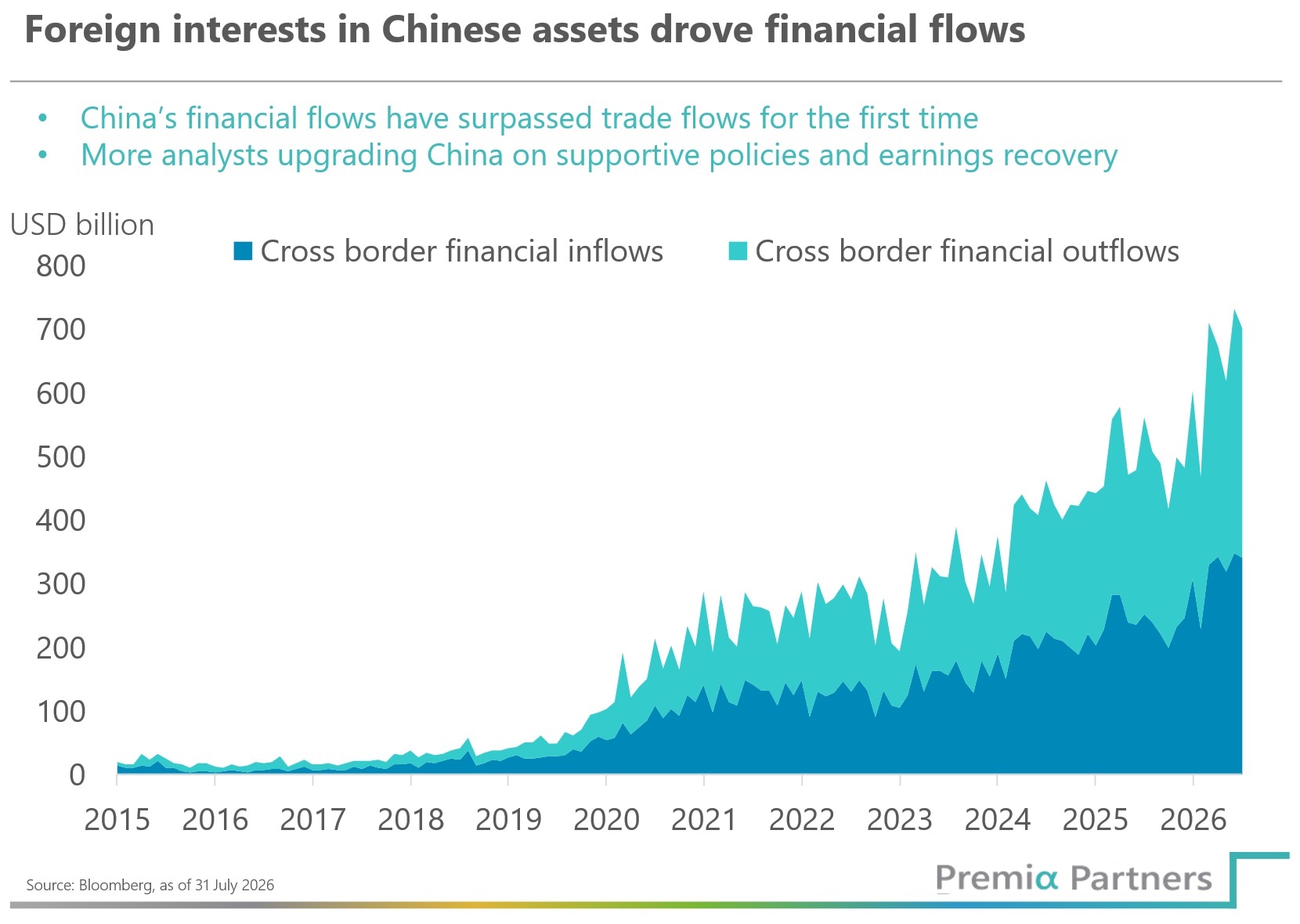
Against this backdrop, foreign active funds are gradually normalizing their underweight positioning. Foreign investors currently hold roughly 3% to 4% of total A-share free-float market capitalization (a stark contrast to the 32% to 47% seen in South Korea, Japan, and Taiwan). As global investors continue to dial down the current underweight or zero weight in China and cross-border inflows return, data has shown institutional positioning are also increasingly prioritizing these hard tech sectors and actors rather than the broad base CSI300 or MSCI China A exposure that have more traditional industries while missing many notable hard tech leaders in STAR50 which are increasingly important for portfolio completion as well.
In addition to portfolio completion as aforesaid, the STAR 50 also provides diversification benefits for global portfolios. It consistently exhibits a lower correlation with US equities—just 0.22 with the Nasdaq, compared to the 0.42–0.49 range observed for Korea's KOSPI, Japan's Nikkei 225, and Taiwan's TAIEX.
For global investors looking to navigate this evolving landscape without underwriting single-stock risk, Premia China STAR50 ETF (3151 / 9151 / 83151 HK) could be the good allocation tool that provide convenient access to emerging leaders that are most relevant in China’s hard tech ecosystem, and important drivers powering China’s innovation-driven quality-growth as the 15th Five Year Plan has laid out.